Skip to content

Quick Answer
Painted wardrobes suit most London contexts because they can match any colour scheme, look uniformly clean, and read well in both period and contemporary rooms. Wood grain wardrobes suit rooms that want warmth and texture, and homes where the wood tone can be coordinated with existing flooring or furniture. The choice usually comes down to how much the wardrobe should read as furniture versus as architecture.
Painted and wood fitted wardrobes represent two different design philosophies. Painted wardrobes treat the wardrobe as architecture, reading as an extension of the walls rather than as a piece of furniture. Wood grain wardrobes treat the wardrobe as furniture, adding warmth, texture, and character to the room.
Both approaches produce excellent results in the right contexts. Neither is universally better than the other. The choice depends on the specific room, the surrounding decor, and how the homeowner wants the wardrobe to sit within the finished space. This guide covers the practical differences between the two approaches, where each one succeeds, and the specific considerations that shape the decision in London home
What Painted Wardrobes Actually Are
Painted fitted wardrobes are typically built from MDF because MDF takes paint exceptionally well and does not move seasonally the way solid timber does. The doors are sprayed or hand painted to a specified colour, either at a workshop before installation or on site.
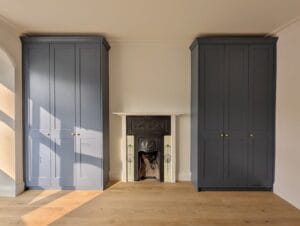
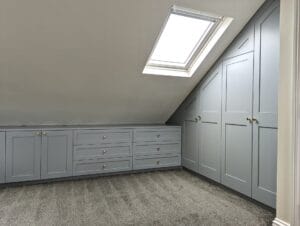
Painted finishes offer complete colour flexibility. Any colour that can be mixed can be applied. This includes standard neutrals, heritage colours, muted greens and blues, and specific paint matches to walls or other decor.
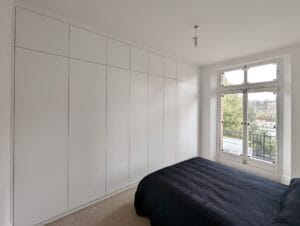
The finish reads as uniform and clean. There is no grain, no natural variation, no visual texture beyond what the paint itself provides. The wardrobe presents as a coloured plane, which allows it to recede visually if painted to match walls, or to become a feature if painted in a contrasting colour.
Hand painted finishes and sprayed finishes both produce quality results in different ways. Sprayed finishes are more uniform and mechanical looking. Hand painted finishes show subtle brush texture that some homeowners prefer for period contexts.
What Wood Grain Wardrobes Actually Are
Wood grain fitted wardrobes are built from solid timber, timber veneer over MDF, or in some cases solid wood throughout the frame with veneered panels. The wood is either stained to a specified colour and lacquered, or left natural and finished with oil or wax to protect the grain.
The finish shows the wood’s character. Grain patterns, subtle colour variations, and the visual texture of the timber all contribute to the appearance. Two doors made from the same species will not look identical because the wood itself is not identical.
Wood tones can be selected from various species. Oak provides a light warm tone with pronounced grain. Walnut provides a darker tone with more subtle grain. Ash provides a lighter tone with clean straight grain. Maple provides a very light neutral tone with fine grain.
Wood grain wardrobes bring warmth to a room in a way that painted wardrobes cannot. The natural material reads differently than a painted surface even when the colours are similar.
Where Painted Wardrobes Work Best
Painted wardrobes succeed in several distinct contexts.
Rooms where the wardrobe should recede into the walls benefit from painted finishes matched to the wall colour. This is particularly effective in smaller rooms where a wood grain wardrobe would visually dominate the space. A painted wardrobe in the same colour as the walls essentially disappears, making the room feel larger.
Period London properties often suit painted finishes because painted joinery is historically consistent with these homes. Victorian and Edwardian properties frequently featured painted built-in cabinets and wardrobes. Painted fitted wardrobes read as appropriate to these contexts.
Contemporary bedrooms with strong colour schemes benefit from painted finishes that pick up specific tones from the surrounding decor. Painted wardrobes can be matched precisely to a wall colour, a piece of art, or a curtain fabric.
Rooms that will be redecorated in the coming years suit painted wardrobes better than wood grain wardrobes because painted finishes can be refreshed or repainted to suit new decor. Wood grain finishes are more permanent commitments.
Where Wood Grain Wardrobes Work Best
Wood grain wardrobes also have contexts where they excel.
Rooms that want warmth and texture benefit from wood grain finishes. Wood adds visual interest that painted finishes cannot match. In a bedroom with neutral walls and minimal decor, a wood grain wardrobe can become the design element that gives the room character.
Rooms with existing wood elements benefit from coordinated wood grain wardrobes. Timber flooring, wood furniture, or exposed timber beams all provide reference points that a wood grain wardrobe can tie into.
Rooms with abundant natural light showcase wood grain particularly well. Sunlight catches the grain, brings out subtle colour variations, and gives the wardrobe a different appearance across the day.
Contemporary bedrooms that want to avoid a fully painted look benefit from wood grain as a break from the painted walls, ceilings, and other joinery elsewhere in the room.
Traditional bedrooms with heritage character often suit wood grain wardrobes because the natural material has been used in quality furniture for centuries and never dates in the way trend based finishes do.
Practical Differences Between the Two
Beyond aesthetics, painted and wood grain wardrobes have practical differences that affect daily life.
Painted finishes show marks and scuffs more visibly than wood grain finishes. A scratch on a painted door reveals the material underneath and requires touch up to hide. A scratch on a wood grain door often disappears into the natural texture or can be treated with wood care products.
Wood grain finishes patina over time. This can be attractive as the wood develops a lived in character, but the wardrobe’s appearance will change gradually across years. Painted finishes remain visually consistent unless they are refreshed.
Repairs are handled differently. Painted finishes can be touched up locally using the original paint. Wood grain finishes require care to match the specific grain and colour of the surrounding area.
Cleaning is straightforward for both. Painted finishes wipe clean with a slightly damp cloth. Wood grain finishes benefit from occasional wax or oil to maintain the finish, and should not be cleaned with wet cloths that could raise the grain.
Longevity is comparable when both are properly specified and finished. Neither approach is fundamentally more durable than the other. Both should last decades in daily use.
Cost Considerations
Painted and wood grain wardrobes cost broadly similarly at the standard specification level. The final cost depends on the specific materials, finish quality, and complexity of the design rather than on the painted versus wood grain distinction.
Painted wardrobes in unusual colours may involve slightly higher cost for paint matching. Wood grain wardrobes in premium species like walnut cost more than wardrobes in oak or ash.
Refinishing later is usually cheaper for painted wardrobes than for wood grain wardrobes. A painted wardrobe can be repainted in a different colour with acceptable results. A wood grain wardrobe cannot easily change wood tone once installed.
Making the Decision for Your Room
The right choice for your room depends on several factors that are worth considering together rather than in isolation.
What does the surrounding room already contain? Rooms with existing wood elements tend to work well with wood grain wardrobes. Rooms without existing wood elements can go either way.
How much visual weight should the wardrobe carry? A wardrobe that should recede works better painted. A wardrobe that should be a feature works better in wood grain, or in a contrasting painted colour.
How likely is the room to be redecorated? Rooms that will change decor benefit from painted wardrobes that can be updated. Rooms that will stay similar for decades suit wood grain wardrobes.
What is the room’s natural light like? Rooms with abundant natural light showcase wood grain well. Rooms with limited natural light may benefit from lighter painted finishes that reflect available light.
What is your personal preference? Both approaches produce beautiful results. The decision that will make you happier every morning matters more than the theoretical case for either option.
FAQs
Can painted wardrobes be repainted later if I change the room?
Yes. Painted wardrobes can be refinished in a different colour with proper preparation. The existing paint needs to be lightly sanded and cleaned before new paint is applied. Colour changes are one of the practical advantages of painted wardrobes over wood grain alternatives.
Do wood grain wardrobes fade over time?
Yes, gradually. Wood grain finishes develop a patina over years of use and light exposure. This is usually considered attractive rather than problematic, but wardrobes in strong direct sunlight can show more pronounced colour changes than wardrobes in shaded positions.
Which is more suitable for a London period property?
Both work well in period properties. Painted wardrobes align with the historical use of painted joinery in Victorian and Edwardian homes. Wood grain wardrobes suit period properties where the existing character includes wood elements like flooring, doors, or exposed beams.
Are painted or wood grain wardrobes more expensive?
They cost broadly similarly at the standard specification level. Final cost depends more on the specific materials, finish quality, and design complexity than on the painted versus wood grain choice. Premium wood species like walnut cost more than oak or ash. Unusual paint colours may cost slightly more than standard colours.
What Humphries Cabinets Offers
We design and install fitted furniture across London with careful attention to the mistakes covered in this guide. Our services include:
• Bespoke Fitted Wardrobes designed around how the household actually stores and uses clothing
• Wardrobe Interiors with mixed rail heights, integrated drawers, and full extension runners
• Floor to Ceiling Wardrobes capturing full room height
• Shaker Style Wardrobes in enduring designs suited to period London properties
• Modern Fitted Wardrobes with contemporary detailing
• Sliding Door Wardrobes where floor space constraints require them
Every project starts with a free design visit that covers storage requirements, room integration, and daily use patterns in detail before finishes are discussed.
Why Choose Humphries Cabinets
At Humphries Cabinets, we have been designing and installing fitted wardrobes across London for over 15 years in both painted and wood grain finishes. We help you consider the choice against the specific room, decor, and how you want the wardrobe to sit within the finished space, and back every installation with our 15 year guarantee.
If you are considering fitted wardrobes for your London home and want to discuss whether painted or wood grain would suit your room better, contact us today to arrange your free consultation.