Skip to content

The best storage for a small London flat is built-in rather than freestanding, because it uses the full height of a room and the awkward spaces shop-bought furniture leaves empty. Slimline and floor-to-ceiling wardrobes, alcove cupboards, hallway and under-stair storage, floating shelves and a compact built-in desk all claw back space. Handleless doors and mirrors help the flat feel as open as it is organised.
In a London flat, square footage is the most expensive thing you own, and most of it is already spoken for. A freestanding wardrobe eats floor space and leaves a dusty gap on top. A chest of drawers blocks half a wall. The storage you can buy in a shop is built for rooms that are bigger than the ones most of us actually live in.
Fitted storage works differently. Because it is built to your room, it reaches into the corners, climbs to the ceiling and wraps around the awkward features that freestanding furniture has to sit clumsily in front of. In a small flat, that difference is not a luxury; it is the whole point. Here is how to claw back space, room by room.
Why Built-In Beats Freestanding in a Small Flat
Freestanding furniture is made to standard sizes, so it rarely fits a real room. It leaves gaps at the sides, a dead zone on top, and it has to stand clear of skirting, radiators and window reveals. All of that is wasted space you have paid for.
Built-in storage uses every bit of it. It runs wall to wall and floor to ceiling, turns alcoves and recesses into proper cupboards, and sits flush so nothing is lost behind or beside it. In a flat where every inch counts, using the full height of a room is often where the biggest gains hide, since the space above head height usually sits completely empty.
Bedrooms: Slimline and Floor-to-Ceiling Wardrobes
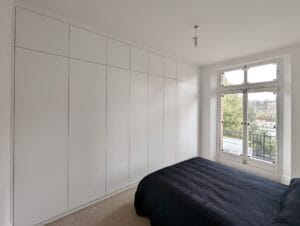
Bedrooms are usually the tightest rooms in a flat, so they require the most careful planning. A slimline fitted wardrobe, shallower than a standard unit, can line a wall without stealing the walking space you need to move around the bed.
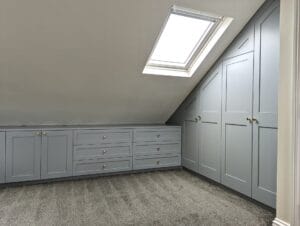
Taking wardrobes right up to the ceiling adds a full extra tier of storage, ideal for the things you reach for rarely, such as bed linen, spare bedding and suitcases. Where a bed sits in an alcove or against a chimney breast, storage can be built over and around it, so the whole wall works hard without crowding the floor. The result is far more storage from the same small footprint.
Living Room: Alcoves, Floating Shelves and Media Storage
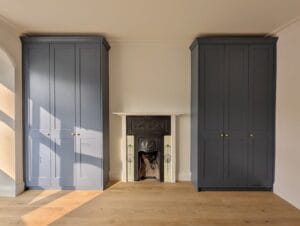
The alcoves on either side of a chimney breast are the most underused space in most living rooms. Fitted cupboards below with shelving above turn them into generous storage and display, without taking a single inch from the middle of the room.
Floating shelves are a small flat’s friend, holding books and ornaments while keeping the floor clear and the room feeling open. A built-in media unit pulls the television, console and cables into one tidy run rather than scattering them across the room. Together, these touches let a compact living room hold far more while still feeling calm and uncluttered.
Hallways and Under-Stair Storage
Hallways are often written off as dead space, yet they are where clutter lands first. Slim, full-height cupboards along a hallway can swallow coats, shoes, bags and the vacuum cleaner, clearing the rest of the flat in the process. Built to the depth of the wall, they barely intrude on the passage.
In a maisonette or split-level flat, the space under the stairs is prime territory. Pull out shoe drawers, a concealed cupboard and angled shelving can turn an awkward, wedge-shaped void into some of the most useful storage in the home. It is space that almost always exists and almost never gets used.
A Compact Home Office Without a Spare Room
Few London flats have a room to spare for a desk, so the desk has to find a home elsewhere. A compact built-in desk can tuck into an alcove, slot into the end of a wardrobe run, or sit beneath a window, with shelving above for files and a cupboard below to hide the printer and cables.
Because it is built in, it uses a footprint a freestanding desk simply could not, and it blends into the room rather than dominating it. When the working day ends, a well-designed built-in workspace looks like part of the room rather than an office that has taken over the living area.
Making a Small Flat Feel Bigger
Storage is only half the job. The other half is making the flat feel as open as it is organised. Handleless doors that open with a push keep fronts smooth and uncluttered, so a wall of storage reads as a clean surface rather than a busy one.
Mirrored wardrobe doors bounce light around and visually double the space, which is why they work so well in small bedrooms. A consistent finish that blends with the walls helps fitted furniture quietly recede into the room. Get these details right, and a small flat feels noticeably larger than its measurements suggest, while holding far more than it did before.
FAQs
What is the best storage for a small London flat?
Built-in storage, because it uses the space that freestanding furniture wastes. Slimline and floor-to-ceiling wardrobes, alcove cupboards beside a chimney breast, hallway and under-stair units, floating shelves and a compact built-in desk all add real capacity without stealing precious floor space.
Do fitted wardrobes work in rented flats?
They can, but fitted furniture is a permanent alteration, so renters usually need the landlord’s written permission first. For that reason, fitted wardrobes suit owners and long leaseholders best. If you rent, check your tenancy agreement and speak to your landlord before committing to anything.
How do mirrors make a small room feel bigger?
Mirrors reflect light and views, which trick the eye into reading more depth than is really there. Mirrored wardrobe doors are especially effective in small bedrooms, bouncing daylight around the room and visually doubling it, while saving the floor space a separate mirror would take.
Are floor-to-ceiling wardrobes good for small bedrooms?
Yes, they are one of the best choices. By using the full height of the wall, they add a tier of storage above head height that would otherwise sit empty, perfect for bedding and suitcases. That extra capacity means a small footprint holds far more.
How can you add storage to a narrow hallway?
Slim, full-height cupboards built to the depth of the wall work well, swallowing coats, shoes, bags and the vacuum cleaner without blocking the passage. Where there is space under a staircase, pull out drawers and angled shelving turn that awkward void into useful storage.
Fitted Storage Made For Compact London Living
Compact flats and period conversions are something Humphries Cabinets sees a great deal of, having built fitted storage across every London borough for more than 15 years from our base in Charlton. Because we only build wardrobes, cupboards and shelving, we are well practised at finding storage where there seems to be none. We work cleanly in lived-in homes, with dust sheets down and a full clear up at the end, and every project begins with a free design visit, so we can measure your space and plan around its quirks before anything is built.