Skip to content

Quick Answer
Sliding doors suit rooms where floor space in front of the wardrobe is tight, and work well with contemporary design. Hinged doors suit rooms where you want to see the full wardrobe interior at once, and work well with both traditional and modern styles. The decision mostly comes down to available floor space and how you want to access the wardrobe daily.
The door choice on a fitted wardrobe affects daily use more than almost any other design decision. Doors open and close dozens of times per day. They determine how much of the wardrobe interior is visible at once. They dictate how much floor space the wardrobe needs in front of it. And they significantly affect the overall look of the wardrobe in the room.
Most fitted wardrobe conversations present sliding and hinged doors as roughly equivalent options with different aesthetics. In practice they produce quite different daily experiences and suit different rooms for different reasons. The choice is more consequential than it initially appears.
This guide covers the practical differences between sliding and hinged doors, where each one works best, and the specific considerations that shape the decision in London homes.
What Is the Fundamental Difference?
The two door types open in completely different ways:
• Hinged doors swing outward on hinges attached to the wardrobe frame
• Sliding doors move horizontally on tracks at the top and bottom of the wardrobe
This fundamental difference creates every other practical difference between the two options. Hinged doors need clear floor space in front of the wardrobe to swing open. Sliding doors need no floor space because they move within the wardrobe’s own footprint. Hinged doors can all open at once to reveal the entire wardrobe interior. Sliding doors can only reveal half or two thirds of the interior at any one time because one panel must always be behind another.
Every subsequent consideration about sliding versus hinged doors flows from these two mechanical facts.
When Do Sliding Doors Work Best?
Sliding doors work best in specific contexts:
• Small bedrooms where floor space is tight and swing room cannot be spared
• Rooms where a bed sits close to the wardrobe, blocking hinged door opening
• Contemporary interiors where the clean uninterrupted look suits sliding systems
• Rooms where mirror doors are desired, since sliding systems handle mirror weight well
• Very large wardrobes where multiple hinged doors would feel cluttered
• Walk in wardrobe entrances where swinging doors would interfere with internal space
Sliding doors in London bedrooms typically add 10 to 15 percent to the wardrobe cost compared to equivalent hinged doors. The additional cost reflects the track system, roller mechanisms, and the engineering required to make large panels slide smoothly.
Quality matters enormously in sliding door systems. Cheap sliding mechanisms become increasingly frustrating as rollers wear and panels start to catch. Quality systems from established hardware manufacturers continue running smoothly for decades.
When Do Hinged Doors Work Best?
Hinged doors work best when:
• Floor space in front of the wardrobe is adequate for doors to swing fully
• You want to see the entire wardrobe interior at once when choosing clothes
• The design is traditional, where visible hinges and handle details are expected
• Doors are relatively narrow, keeping swing arcs manageable
• Budget matters, since hinged doors are typically more economical than sliding systems
• The wardrobe includes drawers that need full access
Hinged doors come in various configurations:
• Single hinged doors that open one at a time
• Bifold doors that fold back against the wardrobe
• Pivot doors that rotate on a central axis
• Pocket doors that slide into cavities within the wardrobe structure
Standard hinged doors are the most straightforward of these and work reliably for decades. More complex hinged mechanisms like bifolds and pivots can introduce additional failure points over time.
How Much Floor Space Do Hinged Doors Need?
Hinged doors need clear floor space equal to the door’s width in front of the wardrobe to open fully.
For a typical fitted wardrobe with doors measuring:
- 500mm wide, you need 500mm of clear floor space in front
- 600mm wide, you need 600mm of clear floor space in front
- 700mm wide, you need 700mm of clear floor space in front
This matters because bedrooms with tight floor plans often cannot accommodate full door swing. A bed positioned 600mm from a wardrobe makes 700mm doors impossible to open fully. A dressing table in front of a wardrobe wall blocks door opening entirely.
Measuring the floor space before deciding on door type prevents a common mistake where hinged doors are specified without checking that they can actually open.
What About Daily Use?
Daily use patterns differ meaningfully between sliding and hinged doors:
Hinged doors in daily use:
• Open all at once to show the full wardrobe interior
• Allow garments at either end of the wardrobe to be seen simultaneously
• Can be opened partially to grab something specific
• Allow full access to internal drawers and shelves
• Make choosing an outfit easier by showing more options at once
Sliding doors in daily use:
• Only reveal half or two thirds of the wardrobe at any time
• Require moving the panel to access the covered portion
• Prevent simultaneous view of garments at opposite ends
• Make drawer access more awkward, since drawers behind closed panels cannot open
• Involve a slight extra step for each wardrobe interaction
For some households these differences are negligible. For others they become significant daily friction. People who dress quickly and want to see all their options at once often find sliding doors frustrating over time. People who know what they want before approaching the wardrobe find sliding doors fine.
How Do They Differ in Aesthetics?
The visual impact of the two door types differs significantly:
Sliding doors produce:
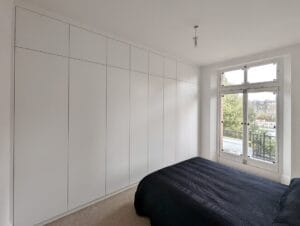
• Clean uninterrupted horizontal lines across the wardrobe front
• Minimal visual complexity with no handles when handleless systems are used
• Opportunities for large mirror panels that make rooms feel larger
• A contemporary look that suits modern interiors
• Visual continuity when doors are closed
Hinged doors produce:
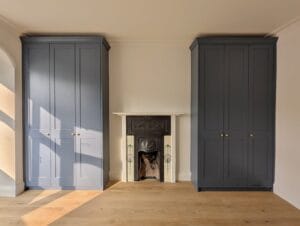
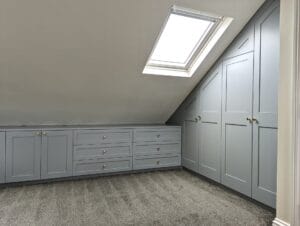
• Visible vertical divisions between doors
• Visible hinges and handles that contribute to the overall design
• Opportunities for panel detailing like shaker frames or decorative mouldings
• A furniture like appearance that suits traditional interiors
• Visual variety from the handle and detail choices
Neither aesthetic is inherently better. The right choice depends on the room’s existing character and the design intent for the wardrobe.
What Are the Maintenance Considerations?
Both door types need maintenance over time, but the maintenance differs:
Hinged door maintenance:
• Hinges may need occasional tightening as wardrobes settle
• Doors may need adjustment to maintain even gaps between panels
• Soft close mechanisms may need replacement every 10 to 15 years
• Handle fixings may loosen over time with heavy use
Sliding door maintenance:
• Tracks need regular cleaning to remove dust and debris
• Rollers may need replacement every 10 to 15 years with heavy use
• Guide rails occasionally need adjustment to prevent panels catching
• Dust accumulation in tracks can cause panels to run less smoothly
Neither maintenance burden is excessive, but sliding systems have more moving parts that can wear or fail. Hinged systems are mechanically simpler and generally require less ongoing attention.
What Does Each Cost?
Cost differences depend on specification but follow general patterns:
For a standard London bedroom fitted wardrobe:
• Hinged door systems represent the baseline cost
• Standard sliding door systems add 10 to 15 percent to the baseline
• Premium sliding door systems with quality hardware add 20 to 30 percent
• Mirror sliding doors add 15 to 25 percent on top of the sliding door premium
The lifetime cost picture is more nuanced. Quality hinged systems typically outlast cheap sliding systems. Quality sliding systems match the lifespan of hinged systems. Replacing worn sliding components can involve substantial work compared to the simpler maintenance of hinged systems.
FAQs
Are sliding wardrobe doors better than hinged?
Neither is universally better. Sliding doors work better in rooms where floor space is tight. Hinged doors work better in rooms where full wardrobe access matters. The right choice depends on the specific room, the floor plan, and how the wardrobe will be used daily.
Do sliding wardrobe doors last as long as hinged doors?
Quality sliding doors match the lifespan of quality hinged doors, typically 25 years or more with appropriate care. Cheap sliding systems wear faster than cheap hinged systems because sliding mechanisms have more moving parts. The quality of the hardware matters more than the door type for longevity.
Can I have both sliding and hinged doors on the same wardrobe?
In some designs yes. A large wardrobe installation might use sliding doors on the main hanging sections and hinged doors on narrower sections or display cabinets. Combining door types requires careful design to ensure the result looks intentional rather than compromised.
Which is more expensive, sliding or hinged doors?
Hinged doors are typically less expensive than sliding doors, with sliding adding 10 to 30 percent to the total wardrobe cost depending on specification. Mirror sliding doors cost more than solid sliding doors. Premium hinged systems with soft close hardware can approach the cost of standard sliding systems.
What Humphries Cabinets Offers
We design and install fitted wardrobes across London in both sliding and hinged door configurations. Our services include:
• Bespoke Fitted Wardrobes with sliding or hinged doors to suit your room
• Sliding Door Wardrobes with quality track systems and smooth operation
• Mirror Wardrobes with mirror panels on sliding or hinged configurations
• Modern Fitted Wardrobes with contemporary door systems
• Shaker Style Wardrobes with traditional hinged doors
• Floor to Ceiling Wardrobes in either door configuration
Every project starts with a free design visit where we assess your room’s floor space, discuss daily use patterns, and recommend the door configuration that suits your specific situation.
Why Choose Humphries Cabinets
At Humphries Cabinets, we have been designing and installing fitted wardrobes in both sliding and hinged configurations across London for over 15 years. We help you make the right door choice for your specific room rather than defaulting to whatever is easiest to supply, and back every installation with our 15 year guarantee.
If you are planning fitted wardrobes for your London home and want to discuss sliding versus hinged doors, contact us today to arrange your free consultation.