Skip to content

Hand-painted finishes give a soft, characterful look, can be matched to almost any colour and can be touched up or repainted later, which suits period homes and visible doors. Laminate is a tough, factory-made surface that resists scratches and moisture, wipes clean and is more economical, which makes it ideal for hard-wearing interiors. Many fitted pieces use a painted exterior with a laminate interior to get the best of both.
Run your hand across a fitted wardrobe, and you can feel the decision someone made months earlier. A hand-painted door has a soft, slightly warm surface. A laminate one is cooler and perfectly even. Both can look excellent, but they behave very differently once they are living in your home.
Finish is one of the last things people think about and one of the first things they notice every day. It shapes the look of the piece, how it copes with knocks, what it costs and how you care for it. Choosing well means matching the finish to your room, your routine and your budget, rather than simply picking a colour you happen to like.
What Hand-Painted Really Means
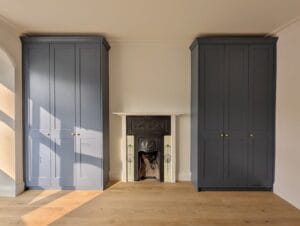
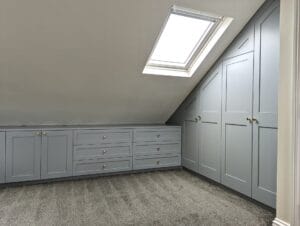
Hand-painted means exactly that. The piece is primed and painted by hand, usually with several coats, to build a smooth and characterful surface. On fitted furniture, this is often done on site once the carpentry is complete, so the whole run is finished in place, and the joins between sections disappear under the paint.
It is the finish that suits period homes, because it sits comfortably alongside original mouldings and skirting. It also works beautifully on shaker doors, beading and cornice, where the brushwork can follow the detail rather than flatten it. A close relative is the sprayed finish, where paint or varnish is applied with a spray gun for an ultra-even, factory smooth surface in satin or full gloss. Sprayed real oak is a popular middle path, keeping the natural grain while adding a warm, modern sheen.
Why Laminate Works So Well
Laminate is a tough, factory-applied surface bonded to a board. It comes in solid colours, woodgrain effects and subtle textures, and it is genuinely hard-wearing, resisting scratches, moisture and wiping clean with a cloth. Because it is made under controlled conditions, every panel matches the next exactly, with no variation in tone.
It is especially popular for interiors. An oak effect laminate gives a warm, premium look inside a wardrobe while standing up to the daily wear the inside takes, from hangers and belts to shoes and storage boxes. For the parts of a piece that work hard but are seen less, laminate often makes the most sense.
Durability and Everyday Wear
The two finishes age in different ways. Laminate shrugs off knocks better day to day, since it resists scratches and does not chip the way paint can. Its weak point is repair. If a panel is badly damaged or an edge lifts after many years, it usually has to be replaced rather than mended.
Hand-painted is a little more prone to the odd scuff or chip, perhaps from a belt buckle or a vacuum cleaner. Its advantage is that it can be touched up or fully repainted, so a tired piece can be refreshed years later without replacing a thing. In a busy family home, a hard-wearing laminate interior paired with a painted exterior often gives the most practical result.
Colour, Style and the Look of Your Room
This is where hand-painted pulls ahead. Because it is mixed paint, you can have almost any colour, including heritage shades from ranges such as Little Greene, and match it to your walls, woodwork or a favourite fabric. Laminate is limited to the manufacturer’s range, which is broad but not unlimited, and matching an exact wall colour is not always possible.
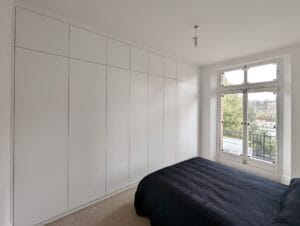
Style plays a part, too. For a traditional or period look, hand paint on shaker doors is hard to beat, and it lets a wardrobe blend into the architecture of an older home. For a sleek, contemporary feel, a sprayed gloss or a crisp, even laminate can look superb and modern. Neither is the right answer on its own. The right answer is the one that suits your room.
Cost and Where Each Makes Sense
As a general rule, laminate is the more economical finish, because it arrives ready-made and needs less labour on site. Hand painting sits at the more premium end, since it is slower and highly skilled, with priming, several coats and drying time all carried out by hand.
That does not make one better than the other, only better suited to different jobs and budgets. A common and sensible approach is a hand-painted exterior, where you see and touch it most, paired with a hard-wearing laminate interior. That balances the look you want on the outside against a practical, durable surface within, and helps the budget stretch further.
Caring for and Repairing Each Finish
Laminate asks very little. A wipe with a damp cloth keeps it clean, and it copes well in rooms that see a little moisture. Damage is rare, though when it happens, the panel is usually replaced rather than repaired.
Hand-painted surfaces prefer a gentler touch, a soft cloth and a mild cleaner. The real benefit shows up over time, since a knock can be touched up with a little matching paint kept back from the original job, and the whole piece can be repainted in a new colour years down the line. Neither finish needs much attention, but knowing how to look after yours keeps it looking right for the long term.
FAQs
Is hand-painted furniture more durable than laminate?
Not exactly, since the two wear differently. Laminate resists scratches and knocks better day to day and does not chip. Hand paint can scuff over time, but it can also be touched up or repainted, so it recovers from damage in a way laminate cannot.
Can you colour-match fitted furniture to my walls?
With a hand-painted finish, yes, in most cases. Because the paint is mixed, it can be matched to your walls, woodwork or fabric, including heritage colours. Laminate is limited to the manufacturer’s range, so an exact wall colour match is not always possible.
Which finish lasts longest, hand-painted or laminate?
Both last many years when looked after. Laminate keeps its look with almost no effort and rarely needs attention. Hand paint may show the odd mark sooner, but because it can be touched up or repainted, its lifespan is extended each time it is refreshed.
Can hand-painted fitted furniture be repaired if it chips?
Yes, and this is one of its biggest advantages. A small chip or scuff can be touched up with matching paint, ideally kept back from the original job. If a piece looks tired after several years, it can be repainted entirely in a fresh colour.
Is laminate cheaper than a hand-painted finish?
Generally yes. Laminate arrives ready-made and needs less labour on site, so it tends to be more economical. Hand painting is slower and more skilled, which sits at the premium end. Pairing a painted exterior with a laminate interior is a popular middle ground.
Finishes Done In House For A Smoother Result
Finishing is something Humphries Cabinets handles in house, and across more than 15 years of building fitted furniture in every London borough from our base in Charlton, that has made all the difference. We brought our hand painting in-house so the painters can work on-site once the carpenters have finished, which gives a smoother and more consistent result than outsourced painting tends to. Whether you lean toward a hand-painted exterior, sprayed real oak or a hard-wearing laminate interior, we will talk through the options at a free design visit and help you choose the finish that suits your room and the way you live.