Skip to content

Quick Answer
Fitted wardrobes suit most London bedrooms, delivering generous storage within the bedroom itself at a reasonable budget. Walk in dressing rooms suit larger properties where an entire room can be dedicated to clothing storage and dressing, typically costing two to three times more than fitted wardrobes but delivering a distinct lifestyle upgrade.
For most homeowners considering a serious wardrobe project, the question eventually becomes whether to install fitted wardrobes within the bedroom or create a separate walk in dressing room. The two options occupy different ends of the storage ambition spectrum. Fitted wardrobes keep clothing in the bedroom with efficient tailored storage. Walk in dressing rooms create a dedicated space for clothing, accessories, and the daily dressing routine itself.
The decision has significant implications for cost, floor space, bedroom use, and daily routines. It is not a decision to make lightly, and it is not always obvious which option suits a particular household and property. This guide covers the practical differences between the two approaches, the specific situations where each one makes sense, and how to think about the choice for your London home.
What Is the Fundamental Difference?
Fitted wardrobes and walk in dressing rooms serve the same basic purpose through quite different approaches.
Fitted wardrobes:
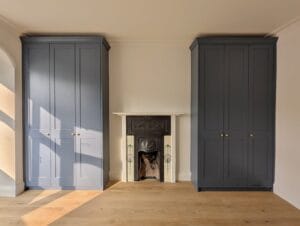
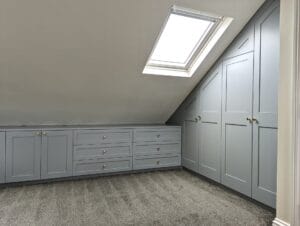
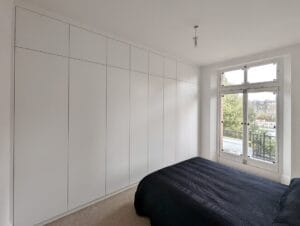
• Install against bedroom walls, typically running wall to wall and floor to ceiling
• Keep clothing storage within the bedroom
• Share floor space with the bed, bedside tables, and other bedroom furniture
• Accessed by opening doors or sliding panels
Walk in dressing rooms:
• Occupy an entire separate room dedicated to clothing and dressing
• Allow full visibility of all stored items at once
• Include dedicated dressing space with mirrors and seating
• Separate the dressing routine from the sleeping area entirely
The scale difference is significant. A fitted wardrobe installation typically occupies 15 to 25 percent of a bedroom’s floor area. A walk in dressing room is typically a dedicated room of 6 to 15 square metres given over entirely to storage and dressing.
When Do Fitted Wardrobes Make More Sense?
Fitted wardrobes suit most London households and properties:
• Standard London bedrooms where no spare room is available for conversion
• Smaller properties where every room has an active use
• Households wanting to maximise bedroom space for the bed and seating
• Budgets that need to deliver maximum storage per pound spent
• Rentals and leaseholds where major alterations are impractical
• Family homes where additional bedrooms are needed for children or guests
Most London fitted wardrobe projects cost between £4,000 and £12,000 depending on scale and specification. This delivers significant storage within the bedroom without requiring a dedicated room to be sacrificed.
Fitted wardrobes handle the storage brief for most London households extremely well. A full wall fitted wardrobe installation in a double bedroom typically provides 3 to 5 metres of hanging rail, multiple drawers, and shelving sufficient for two people’s complete wardrobe needs.
When Do Walk In Dressing Rooms Make More Sense?
Walk in dressing rooms suit specific contexts:
• Larger London properties with spare rooms that can be converted
• Master suite configurations where a dedicated dressing area adds significant lifestyle value
• Households where both occupants have substantial clothing collections
• Properties where the dressing room would also serve as an en suite transition space
• Luxury developments and high value properties where the dressing room contributes to resale value
• Households wanting the specific experience of a dedicated dressing space
A walk in dressing room project in London typically costs between £15,000 and £40,000 depending on scale, specification, and whether structural changes are needed. This is substantially more than a fitted wardrobe project because the entire room is being fitted out rather than just one wall.
The dedicated room approach delivers benefits beyond storage. Dressing without disturbing a sleeping partner. All clothing visible at once rather than hidden behind doors. Space for seating, mirrors, and the actual act of getting dressed. A sense of calm and separation from the bedroom.
How Much Space Does a Walk In Dressing Room Actually Need?
The minimum useful walk in dressing room is smaller than most people expect, but the comfortable size is larger than most people realise.
Minimum useful walk in dressing room:
• Approximately 1.8 metres wide by 2.4 metres long
• Enough for storage along both walls with a central walkway
• Approximately 4.5 square metres total
Comfortable walk in dressing room:
• Approximately 2.5 metres wide by 3 metres long
• Storage on three walls with central dressing space
• Approximately 7.5 square metres total
Generous walk in dressing room:
• Approximately 3 metres wide by 4 metres long or larger
• Storage, dressing table, seating, full length mirror
• Approximately 12 square metres or more
Below the minimum size, the dressing room feels cramped and does not deliver the benefits that justify the cost. Above the comfortable size, additional space delivers lifestyle benefits but not meaningful storage benefits.
What About Converting a Smaller Bedroom?
Many London households considering walk in dressing rooms are weighing whether to convert a smaller bedroom into dressing space.
Common conversions include:
• Converting a small third bedroom in a two person household
• Converting a boxroom or small single bedroom
• Combining the smallest bedroom with the master bedroom
• Converting a dressing area that previously served another purpose
The practical considerations include:
• Impact on property value if removing a bedroom reduces the property’s official bedroom count
• Access from the master bedroom, which may require creating a new doorway
• Light and ventilation in the converted space
• Heating and electrical provision for the dressing room function
• Flooring continuity if the dressing room should match the master bedroom
A boxroom under 6 square metres rarely makes a comfortable walk in dressing room. A proper small bedroom of 8 square metres or more usually does.
Property value impact varies by area and property type. In some London boroughs, three bedroom properties command significantly higher prices than two bedroom properties, making bedroom removal expensive at resale. In other areas, lifestyle features like walk in dressing rooms are valued by buyers.
What About the Hybrid Approach?
Some projects combine fitted wardrobes with partial walk in features:
• Fitted wardrobes along two walls of a larger bedroom with central dressing space
• A corner section of the bedroom partitioned off as a mini dressing area
• Fitted wardrobes with pull out dressing stations and integrated seating
• Bedroom extensions that add dressing room space without taking an existing room
These hybrid approaches work when the budget sits between standard fitted wardrobes and a full dressing room, or when a dedicated room is not available but some dressing room benefits are wanted.
The results vary. Done well, hybrid approaches deliver meaningful improvements over basic fitted wardrobes. Done badly, they feel like compromised versions of both options rather than genuine solutions.
How Does Daily Use Differ?
Daily routines differ meaningfully between the two options.
Fitted wardrobe daily use:
• Choose clothes from the wardrobe in the bedroom
• Dress in the bedroom or adjacent bathroom
• Early risers may disturb sleeping partners accessing the wardrobe
• All clothing is behind closed doors most of the time
• The bedroom serves multiple functions throughout the day
Walk in dressing room daily use:
• Choose clothes with everything visible at once
• Dress in a dedicated space without disturbing anyone
• Early morning dressing happens without affecting the bedroom
• Clothing is on display rather than concealed
• The bedroom serves purely as a sleeping and relaxation space
The difference matters more for some households than others. Shift workers, early risers with sleeping partners, and households where the dressing routine takes significant time benefit most from the separation that walk in dressing rooms provide. Households with simpler dressing routines or more flexible schedules benefit less.
What Are the Resale Considerations?
Both options affect property value, but in different ways.
Fitted wardrobes:
• Generally viewed positively by buyers, particularly in London where storage is prized
• Rarely add specific premium beyond general home appeal
• Reduce the perception of needing to buy freestanding bedroom furniture
• Appeal to the broadest range of potential buyers
Walk in dressing rooms:
• Appeal strongly to buyers who value the lifestyle feature
• May reduce appeal to buyers who need the bedroom count
• Can command premium in luxury properties and high end areas
• Niche appeal that polarises buyer response
For properties intended for sale within a few years, fitted wardrobes typically represent safer value than walk in dressing room conversions. For properties intended as long term homes, lifestyle preference matters more than resale calculations.
FAQs
Is a walk in wardrobe worth it over fitted wardrobes?
For most London households, fitted wardrobes deliver better value than walk in dressing rooms because they do not require sacrificing a separate room. Walk in dressing rooms are worth it when the household genuinely has a spare room, the lifestyle benefit matters enough to justify two to three times the cost, and the property can afford to lose the bedroom count without major value impact.
How much does a walk in wardrobe cost in London?
A walk in dressing room in London typically costs between £15,000 and £40,000 depending on size, specification, and whether structural changes are needed. This compares with £4,000 to £12,000 for a well specified fitted wardrobe. The cost difference reflects the entire room being fitted out rather than one wall.
Can a small bedroom be turned into a dressing room?
Yes, if the small bedroom is at least 6 to 8 square metres. Below this size the dressing room feels cramped and does not deliver meaningful benefits over fitted wardrobes in a larger bedroom. Access from the master bedroom often needs to be created, which involves building work.
Do walk in wardrobes add value to a London home?
Walk in dressing rooms add value in luxury properties and high end areas where buyers specifically value the feature. In standard London properties, the removal of a bedroom to create the dressing room can reduce the property’s official bedroom count and potentially its value. The net impact depends on the specific property, area, and buyer market.
What Humphries Cabinets Offers
We design and install both fitted wardrobes and walk in dressing rooms across London. Our services include:
• Bespoke Fitted Wardrobes for standard bedroom installations
• Floor to Ceiling Wardrobes that maximise bedroom storage capacity
• Modern Fitted Wardrobes with contemporary design
• Shaker Style Wardrobes in traditional configurations
• Sliding Door Wardrobes for bedrooms where floor space matters
• Wardrobe Interiors specified for walk in dressing rooms or fitted wardrobes
Every project starts with a free design visit where we discuss whether fitted wardrobes or walk in dressing room conversion suits your property, your household, and your budget.
Why Choose Humphries Cabinets
At Humphries Cabinets, we have been designing fitted wardrobes and walk in dressing rooms across London for over 15 years. We help you make an honest decision between the two options based on your specific situation rather than pushing whichever option delivers higher project value.
If you are weighing fitted wardrobes against a walk in dressing room for your London home, contact us today to arrange your free consultation.