Skip to content

Fitted furniture suits Victorian and Edwardian terraces because it is built to the room, working with period features rather than against them. Alcoves beside a chimney breast, tall ceilings and bay windows become storage, while cornice, beading and skirting can be matched so new pieces look original. Hand-painted finishes in heritage colours tie everything to the house, and a fitted piece sits neatly, even where walls and floors are not quite square.
Step into a Victorian terrace, and the features that make it special are also the ones that make storage tricky. High ceilings, chimney breasts, deep skirting, picture rails and the odd wall that has not been straight since the 1890s. These houses were built for a different way of living, with little thought for the wardrobes and bookcases we want today.
Fitted furniture is the answer that off-the-peg pieces can never be. Because it is built to the room, it works with a period home’s quirks rather than against them, slotting into alcoves, climbing to tall ceilings and echoing the original detailing so closely that it looks original itself. Here is how to add storage to a Victorian or Edwardian terrace without losing an ounce of its character.
The Period Terrace Challenge and Opportunit
Period terraces are loved for their character but are rarely generous with storage. Bedrooms are often modest, hallways are narrow, and built-in cupboards were simply not part of the original plan. Living with a beautiful old house frequently means living with too few places to put things.
At the same time, the very features that make these houses awkward, the chimney breasts, alcoves, tall ceilings and bay windows, are perfect anchors for fitted furniture. Where a freestanding wardrobe would block a feature or sit awkwardly proud of a wall, a fitted piece can be designed to fit around and celebrate it instead.
Alcoves and the Chimney Breast
The single most useful feature in a period terrace is the chimney breast with an alcove on each side. These recesses are made for fitted storage, and using them changes a room without changing its footprint.
Cupboards below and shelving above turn the alcoves into generous storage without taking a single inch from the floor, and framing the chimney breast with matching units on both sides gives a balanced, intentional look. It is the most natural fit there is, and one of the reasons period homes and fitted furniture go so well together. Almost every terrace has this opportunity sitting unused.
Matching the Original Detailing
This is where fitted furniture truly earns its place in a period home. The details that define these houses, the cornice, beading, deep skirting, picture rails and panelled doors, can all be echoed in the furniture so it speaks the same language as the room.
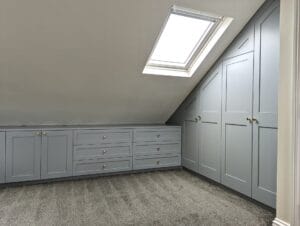
Shaker doors with beading sit comfortably alongside original features, a cornice can crown a wardrobe to match the ceiling line, and a plinth can be made flush so the piece reads as part of the architecture. For an exact match to existing mouldings, custom matching takes the detail further still, so the new work and the old become hard to tell apart.
Making the Most of High Ceilings and Bay Windows
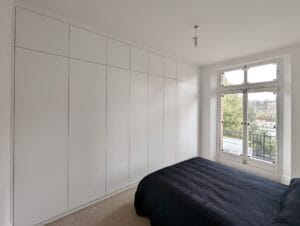
Victorian and Edwardian rooms tend to be tall, and that height is storage waiting to be used. Floor-to-ceiling wardrobes and cupboards put the space above head height to work, ideal for the things you reach for rarely, while keeping the generous proportions of the room intact.
Bay windows, another period signature, are perfect for a window seat with storage beneath. Building into the bay turns an architectural feature into a reading spot and a clever hiding place at once, adding seating and storage without intruding on the room. It is a classic period detail given a genuinely practical job.
Hallways, Box Rooms and Awkward Corners
Storage shortages in a terrace tend to show up first in the hallway and the box room. A slim run of full-height cupboards along a narrow hallway swallows coats, shoes and bags without crowding the passage, clearing clutter from the front door inward.
The small box room, too tight for much freestanding furniture, can become a single wall of wardrobes, a compact home office or even a dressing room. Under-stair storage, another terrace staple, turns an awkward, wedge-shaped void into some of the most useful space in the house. These are the corners where fitted furniture does its quiet, clever work.
Finishes That Suit a Period Home
Finish is what ties new furniture to an old house. A hand-painted finish has the soft, characterful look that sits naturally alongside original woodwork, and it can be mixed to almost any colour, including the heritage shades these homes wear so well.
A deep, traditional colour suits a panelled study or a cosy bedroom, while a softer, lighter tone keeps a period room feeling bright and open. Matched to the existing paintwork and detailing, fitted furniture settles into the house in the best possible way, looking less like something added and more like something that was always there.
FAQs
Why is fitted furniture good for a Victorian or Edwardian house?
It is one of the safest options, because it is fixed securely to the wall and cannot be tipped over, unlike many freestanding units. Soft-close doors and drawers protect small fingers, and rounded details and low, reachable storage all keep a child’s room safe.
Can fitted wardrobes match my period features?
By designing flexibility from the start. Adjustable shelves, hanging rails that can be raised, and a changing top that lifts away to reveal drawers all let the same fitted furniture change use over time, carrying a child from nursery years through to their teens.
What style of wardrobe suits a period terrace?
A nursery works best with a changing area at a comfortable height, with nappies and creams close to hand, plus drawers and cupboards for tiny clothes. A low shelf for books and soft toys helps, and a changing top that can be repurposed adds longevity.
How do you fit furniture into a period home with uneven walls?
Yes. Hanging rails can be set low so a small child can reach their own clothes, then raised as they grow. Adjustable shelves and drawers can be reconfigured too, so the wardrobe keeps working from toddler years right through to the teenage wardrobe it eventually becomes.
Can you build storage into the alcoves beside a chimney breast?
A hard-wearing painted or laminate finish that wipes clean works best, since it copes with sticky hands, felt tip pens and daily wear. Painted finishes have an advantage, as they can be repainted in a new colour as your child grows and tastes change.
Fitted Furniture That Honours Your Period Home
London’s Victorian and Edwardian terraces are where Humphries Cabinets has spent much of the past 15 years and more, building fitted furniture from our base in Charlton and covering every borough. Detail is something we genuinely care about, from matching cornice and beading to working neatly around the wonky walls and uneven floors that come with an older house. Our shaker style and hand-painted finishes were made for these properties, and every project begins with a free design visit, so we can plan furniture that looks as though it has always belonged.