Skip to content

If you’re a landlord in London, you already know the rental market is competitive. Properties that stand out get let faster, attract better tenants, and hold their value longer. If you’re a tenant, you know that most rental properties either have no storage at all or have whatever barely-functional wardrobe the landlord threw in five years ago.
Fitted furniture changes both of those situations — and in London’s space-challenged homes, it changes them significantly.
This guide covers what landlords and tenants both need to know about bespoke fitted furniture in rental properties: why it makes sense, what to prioritise, and how to approach it correctly.
Why Fitted Furniture Works So Well in London Rentals
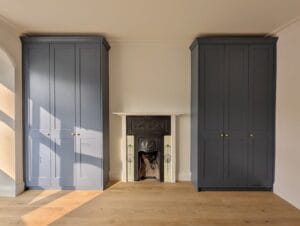
London homes — particularly Victorian and Edwardian terraces, purpose-built flats, and converted properties — are full of awkward spaces. Narrow hallways. Alcoves beside chimney breasts. Rooms that are just slightly the wrong shape for standard freestanding furniture.
Freestanding wardrobes, flat-pack shelving units, and off-the-shelf storage rarely solve these problems. They leave gaps, create clutter, and make a room feel smaller than it is.
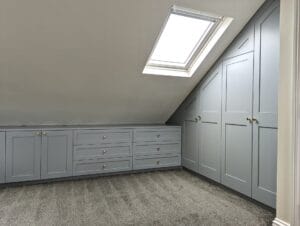
Fitted furniture is designed and built to the exact dimensions of the space. Every centimetre is accounted for. Alcoves become wardrobes. Hallways become organised. Living rooms feel like they were actually designed — not just furnished.
That’s why fitted storage is consistently one of the most requested and most appreciated features in rental properties across London.
For Landlords: What You Need to Know
Does Fitted Furniture Add Value to a Rental Property?
Yes — in two ways. First, it increases the property’s appeal to prospective tenants, making it faster to let and easier to justify a higher asking rent. Second, quality bespoke fitted furniture is built to last. Unlike freestanding pieces that deteriorate quickly in a rental environment, well-made built-in storage stays functional and looking good across multiple tenancies — reducing the cost and hassle of replacement.
Fitted furniture also signals to tenants that the property has been thoughtfully prepared. That first impression matters during viewings and has a direct impact on how quickly a property lets.
The Spaces That Make the Biggest Difference
You don’t need to fit out the entire property at once. Focus on the areas where storage has the greatest impact on tenant satisfaction:
Hallways
Hallways are one of the most commonly wasted spaces in London rentals. Without proper storage, they become dumping grounds for coats, shoes, bags, and posts. Built-in cupboards, shelving, and drawers transform a hallway into a genuinely functional space that tenants will use and appreciate every day. See our hallway wardrobe and storage solutions for inspiration.
Bedrooms
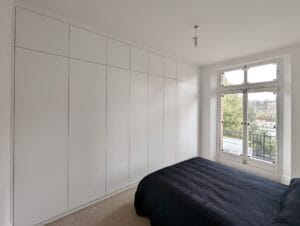
A well-designed, fitted wardrobe with hanging rails, shelving, and drawers is one of the most valued features in any rental bedroom. It removes the need for tenants to bring their own bulky wardrobes and immediately makes the room feel more complete.
Under-stairs areas
Frequently overlooked, the space under a staircase can be converted into a highly practical built-in storage area with cupboards, drawers, or open shelving. See our built-in cupboards page for examples.
Living rooms
Alcove units, built-in shelving, and media units help tenants keep the living space organised and clutter-free. In London rentals, where living rooms are often on the smaller side, this makes a noticeable difference to how the room feels. Browse our alcove units and living room shelving for ideas.
Choosing the Right Style and Finish for a Rental
When fitting out a rental property, the goal is a style that’s durable, neutral, and broad in appeal — something that will work well across multiple tenancies without feeling dated or divisive.
At Humphries Cabinets, the styles that tend to work best in rental properties are:
Shaker-style wardrobes and cupboards — A timeless choice that works particularly well in period properties like Victorian and Edwardian homes. Clean lines, subtle detailing, and wide appeal make shaker style a reliable investment for landlords. See our shaker style wardrobes.
Modern fitted wardrobes with spray-painted finishes — Ideal for newer builds or contemporary interiors. Spray-painted MDF provides a hard-wearing, low-maintenance surface that holds up well in a rental context. See our modern fitted wardrobes.
Floor-to-ceiling wardrobes — These maximise storage in any bedroom and create a clean, built-in look that photographs well and impresses during viewings. See our floor-to-ceiling wardrobe options.
Avoid highly specific finishes or trend-led designs. A neutral, well-crafted fitted wardrobe will still look great in ten years. Something very niche may not survive one tenancy change without feeling out of place.
Common Mistakes Landlords Make with Fitted Furniture
Buying cheap freestanding alternatives instead — Flat-pack wardrobes look tired quickly, don’t fit the space properly, and often need replacing between tenancies. Bespoke fitted furniture is a one-time investment that lasts.
Ignoring the hallway — It’s the first thing tenants see every day and one of the easiest areas to transform with fitted storage. Many landlords overlook it entirely.
Choosing style over practicality — Internal layout matters as much as the door style. A wardrobe with the right mix of hanging space, shelving, and drawers is far more useful — and impressive — than a beautiful door on a poorly organised interior. Our wardrobe interiors guide covers this in detail.
For Tenants: What You Need to Know
Living in a Property with Fitted Furniture Already Installed
If the rental property you’re moving into has fitted wardrobes, shelving, or cupboards already in place, these form part of the property — they’re not the landlord’s moveable possessions, and they stay when you leave.
Before moving in, take time to document the condition of any fitted furniture carefully — photos and a written note of any pre-existing marks, damage, or wear. This protects you at the end of the tenancy when it comes to deposit deductions.
The practical upside? Well-fitted furniture significantly reduces what you need to bring with you. A well-designed, fitted wardrobe provides more usable storage than most freestanding wardrobes of a similar size, which means fewer boxes, an easier move, and a more organised home from day one.
Can Tenants Install Fitted Furniture in a Rental?
This is where tenants need to be careful. Fitted furniture is fixed to the structure of the property — walls, floors, and ceilings are all affected during installation and removal. Installing any fitted storage without your landlord’s written permission is very likely to breach your tenancy agreement, and could result in deposit deductions at the end of your tenancy.
The right process is straightforward:
Ask your landlord in writing — explain what you’d like to install and why
Agree in writing what happens at the end of the tenancy — does the furniture stay or get removed? Who is responsible for making good any damage?
Get any agreement documented before any work is carried out
In many cases, landlords are happy to allow fitted furniture installations — particularly if the furniture will remain in the property at the end of the tenancy, adding value they don’t have to pay for. But verbal agreements are not enough. Always get it in writing.
What to Do If You Want More Storage in a Rental
If the property lacks adequate storage and you want to improve it, here’s a sensible approach:
- Talk to your landlord first — frame it as a benefit to the property, not just a request for yourself
- Get quotes from a professional fitter like Humphries Cabinets so your landlord can see exactly what’s being proposed
- Agree who pays — in some cases, landlords will contribute, particularly if they can see the value it adds
- Document everything before work begins
FAQ: Fitted Furniture in Rental Properties
Does fitted furniture increase rental value?
Generally, yes — particularly in London, where storage space is at a premium. A bedroom with a quality fitted wardrobe is more attractive to prospective tenants and can justify a higher asking rent, especially in competitive areas.
Who owns fitted furniture in a rental property — landlord or tenant?
If the fitted furniture was installed by the landlord, it belongs to the landlord and is part of the property. If a tenant has installed it with written permission, ownership and what happens at the end of the tenancy should be agreed in writing beforehand.
Can a tenant remove fitted furniture at the end of a tenancy?
Only if this was agreed in writing before installation. Removing fitted furniture without agreement typically causes damage to walls and surfaces, which would likely result in deposit deductions.
What styles of fitted furniture work best in rental properties?
Yes. Door-activated or motion-sensor lighting operates independently of the room’s main lighting circuit. Wired LED systems can also be connected to a separate switch if preferred.
Is it worth landlords investing in fitted furniture before letting?
Neutral, timeless styles in durable finishes — shaker, modern spray-painted, or classic panelled designs — tend to work best across multiple tenancies. Avoid anything too trend-specific or high-maintenance.
What areas should a landlord prioritise for fitted furniture?
Bedrooms, hallways, and living rooms deliver the highest return on investment in terms of tenant appeal and property value. Under-stairs storage is also worth considering, where space allows.
Get a Free Design Consultation with Humphries Cabinets
Whether you’re a landlord looking to improve a rental property’s appeal and long-term value, or a tenant who has been given the green light to upgrade your storage, bespoke fitted furniture is an investment that pays off every day it’s in use.
Humphries Cabinets designs and builds custom-fitted wardrobes, built-in cupboards, hallway storage, shelving, and cabinetry across London. Every piece is built to the exact dimensions of your space, using durable materials and finishes that stand up to real-world use over the long term.
👉 View our fitted wardrobe range — or book a free design visit and we’ll come to you, take measurements, and help you plan the right solution for your property.
Also, explore our portfolio to see recent projects across London.