 Skip to content
A well-designed wardrobe doesn’t just store your belongings—it transforms how you experience your daily routine. When everything has a dedicated place, mornings feel calmer, finding essentials becomes effortless, and your wardrobe stays organised without constant rearranging. Shoes, bags, and accessories are often the trickiest items to store because they come in various shapes, sizes, and usage patterns. That’s why smart planning is crucial. By understanding your storage needs, analysing your habits, and designing with intention, you can create a layout that feels elegant, efficient, and perfectly suited to your lifestyle. And this brings us directly to how you can plan the perfect wardrobe layout for shoes, bags, and accessories.
1. Start by Categorising Everything You Own
Before deciding on shelves or drawers, take stock of your belongings. Group items by type—heels, trainers, boots, handbags, clutches, belts, scarves, and jewellery. This gives you a clear understanding of how much space each category needs. It also highlights what should be stored at eye level, what can go lower, and what fits best in pull-out sections. Good planning begins with knowing exactly what you own.
2. Design Dedicated Shoe Storage That Maximises Space
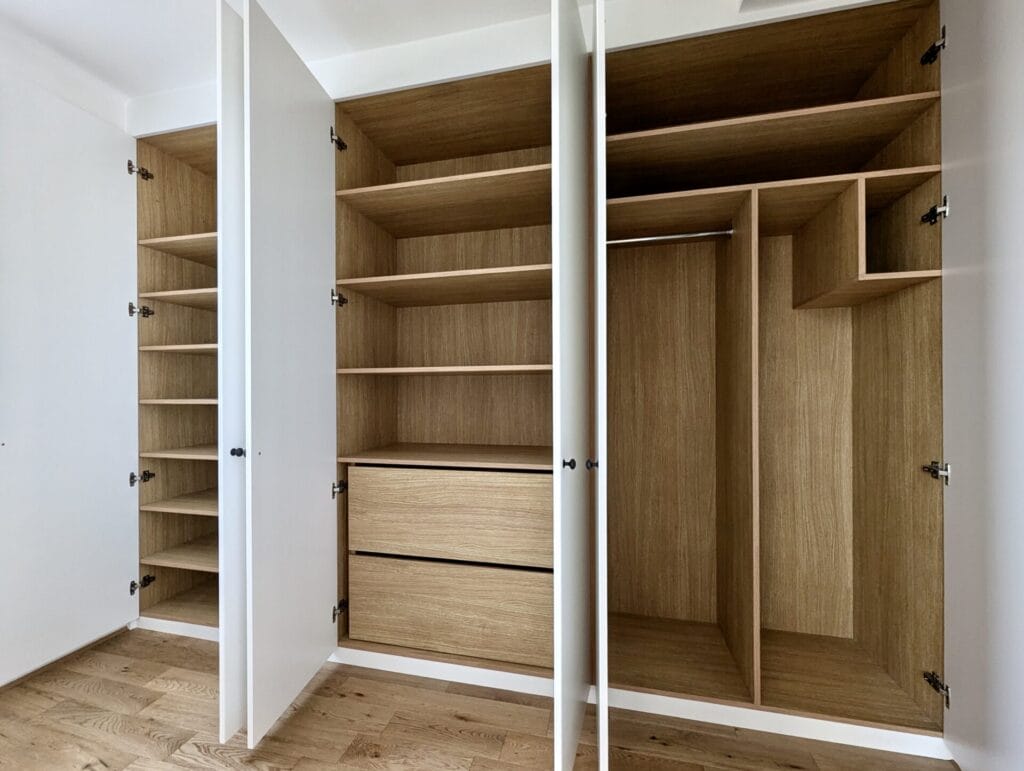
Shoes require specific storage solutions depending on their structure and frequency of use. Adjustable shoe shelves accommodate seasonal changes, while slanted racks offer better visibility and airflow. Deep pull-out drawers are ideal for trainers, flats, and children’s shoes, keeping pairs tidy and easy to access. For tall boots, vertical compartments help maintain shape and prevent damage. A combination of these features ensures your footwear stays organised year-round.
3. Create Stylish, Functional Spaces for Handbags
Handbags benefit from upright storage that protects their structure and finish. Open cubby-style shelves are perfect for displaying frequently used bags, while taller compartments accommodate totes and structured designs. For luxury handbags, consider dust-proof cabinets or glass-fronted doors that showcase them while keeping them protected. Smaller clutch bags fit beautifully into shallow drawers or slim shelves. This kind of arrangement not only looks luxurious but also keeps your collection in pristine condition.
4. Use Smart Accessories to Keep Things Visible and Accessible
Accessories are easy to misplace, so thoughtful organisation is essential. Pull-out trays with dividers are perfect for jewellery, watches, and small items. Hooks or rail systems can store belts, ties, or scarves without tangling them. Velvet-lined compartments protect delicate pieces, while transparent sections make it easy to see what you own at a glance. The goal is to ensure everything has a place where it can be found instantly.
5. Maximise Vertical and Hidden Spaces for Better Order
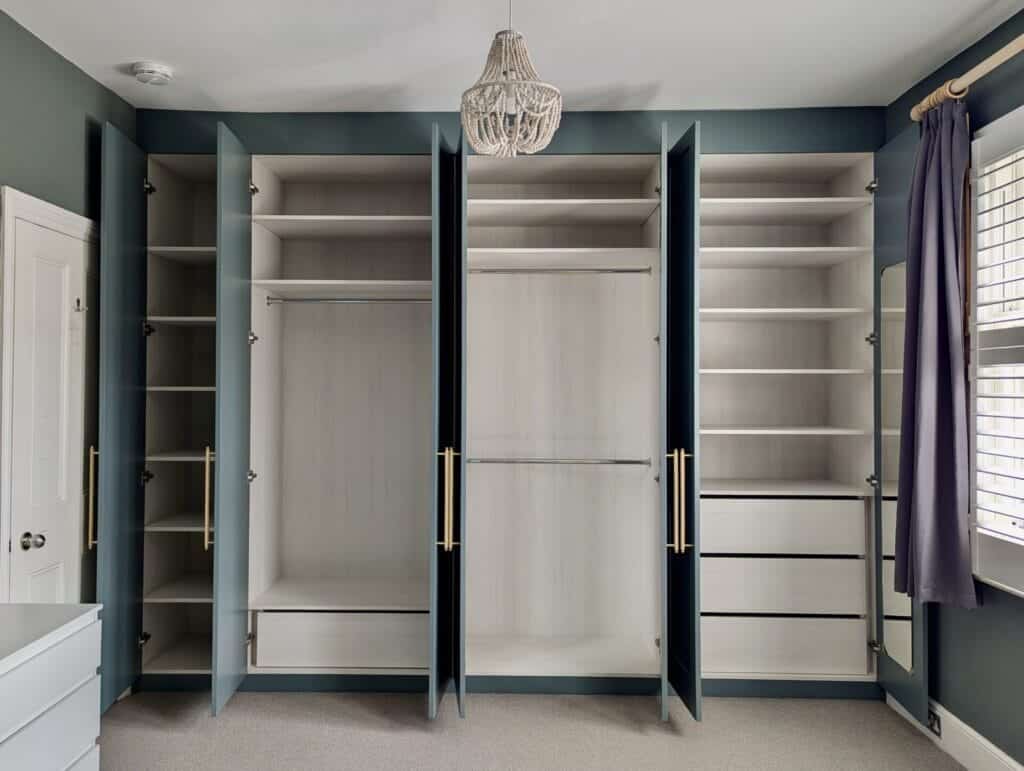
Good wardrobe design makes full use of height. Upper shelves are ideal for occasional-use items or storage boxes. Pull-down hanging rails allow you to reach high sections effortlessly. Hidden drawers, corner units, and integrated lighting enhance visibility and accessibility while maintaining a clean, luxurious aesthetic. Vertical storage ensures no space goes unused and keeps your wardrobe perfectly balanced.
Conclusion
Designing the perfect wardrobe layout for shoes, bags, and accessories requires thoughtful planning, smart organisation, and attention to detail. By categorising your belongings, choosing purpose-built storage features, and maximising vertical space, you can create a wardrobe that remains elegant, efficient, and easy to maintain.
At Humphries Cabinets, we specialise in crafting bespoke fitted wardrobes designed around your lifestyle and daily needs. With over 15 years of experience and a strong presence across London, our team delivers custom wardrobe solutions that combine precision, beauty, and long-lasting craftsmanship. Let us help you transform your storage into a space that not only looks stunning but truly works for you.
-
Save
-
Save

